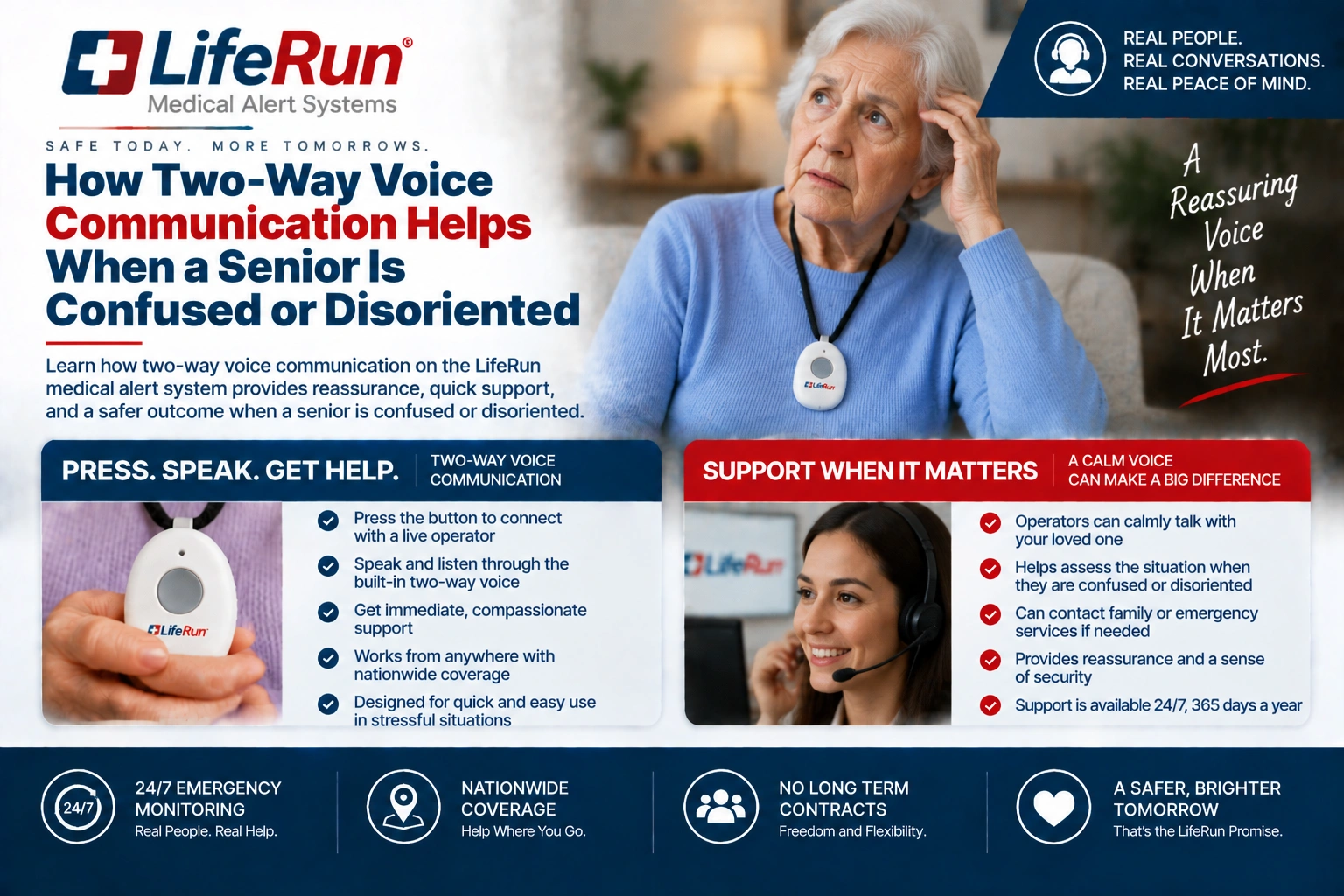
Two-way voice communication for seniors can be especially useful when an emergency is confusing, frightening, or difficult to explain. At LifeRun, our medical alert devices are designed so the wearer can speak with the monitoring center through the device instead of needing to find a phone, open an app, or dial a number after an alert.
Confusion or disorientation can happen for many reasons, and a medical alert device should never be used to diagnose why it is happening. The practical value of two-way voice is simpler: once the call is connected, a monitoring specialist has a direct communication channel with the wearer. The specialist can listen, ask basic questions, and use the available response protocol and location information to coordinate the next step.
Why a Direct Voice Connection Matters During a Stressful Moment
Emergencies can disrupt normal thinking even for people who are usually calm and independent. A senior may know that something is wrong but struggle to remember a phone number, describe an address, or decide whom to call. A wearable medical alert system can remove several of those steps by creating a dedicated path to the monitoring center.
The Senior Does Not Have to Locate a Phone
LifeRun devices with built-in two-way voice allow communication through the wearable itself. For the Belle W, the speaker and microphones are integrated into the device. After the help call is initiated and connected, the wearer can communicate without moving to a landline or searching for a smartphone.
A Monitoring Specialist Can Ask Simple Questions
Two-way voice gives the monitoring specialist an opportunity to hear what the wearer can say and ask straightforward questions about what happened, whether the person is hurt, and what kind of help may be needed. The goal is not to diagnose the senior. It is to gather enough information to follow the established emergency protocol and coordinate an appropriate response.
Short Questions Can Reduce the Burden on the Wearer
A confused person may not be able to give a long explanation. Direct communication lets the conversation be broken into smaller questions. Even partial answers, sounds, or changes in responsiveness may provide context for the monitoring specialist when combined with the alert and location information available to the system.
Location Information Can Support the Conversation
Disorientation may make it difficult for a senior to state exactly where they are. LifeRun monitoring plans include GPS location tracking, and Belle W also uses WiFi location services and proprietary homing technology. These tools can provide location context when an alert occurs, although no location technology should be assumed to work perfectly in every environment.
The Wearer Does Not Have to Recite an Address From Memory
If the system can provide usable location data, the monitoring specialist does not have to depend only on the wearer remembering and accurately stating an address. That can be valuable when someone is away from home, unsure of a street name, or too distressed to describe the surroundings clearly.
Emergency Contacts Can Add Context
A current emergency contact list gives the monitoring team another route for obtaining context or notifying family. This is why we encourage families to choose dependable contacts and keep phone numbers current. Two-way voice, location data, and a well-maintained response plan work together rather than acting as isolated features.
What If the Senior Cannot Explain What Happened?
A two-way voice connection is useful even when the conversation is incomplete. The wearer may be able to say only a few words, answer yes or no, or remain silent. Families should not assume that unclear speech or confusion means the monitoring specialist will know the medical cause. The system is designed to support emergency communication and response, not medical diagnosis.
Silence Does Not Make the Alert Meaningless
An activated medical alert still provides a reason for the monitoring center to follow the user’s protocol. The specialist can attempt communication, review available alert and location information, and take the next response step based on the established process. The exact action depends on the circumstances and protocol rather than a universal script.
Family Instructions Should Be Prepared Before an Emergency
Families can make the system more useful by discussing the senior’s emergency contacts, preferred response order, home access information, and any other details they choose to include during setup. Planning these points in advance reduces the number of decisions that have to be made while the senior is distressed.
Two-Way Voice Also Provides Reassurance While Help Is Being Coordinated
A direct human connection can be reassuring during an emergency because the wearer knows the alert has reached the monitoring center. We provide 24/7 access to operators through the Belle W and built-in HD voice. We keep the claim bounded: the feature creates a communication channel, but it does not guarantee a particular medical outcome or eliminate the need for emergency services.
The Wearer Can Receive Simple Instructions About the Response
The monitoring specialist can tell the wearer that the call has connected and communicate what response is being coordinated. For a senior who is frightened or unsure what is happening, knowing that someone is listening can make the process easier to follow.
The Family Can Know That a Monitoring Process Is Underway
Family notifications and emergency-contact workflows are part of the broader service. Keeping those contacts accurate allows the monitoring team to communicate with the people the senior has chosen while handling the alert according to the response protocol.
How Families Can Prepare a Senior to Use Two-Way Voice
The best time to learn the voice feature is before a real emergency. During setup, the wearer should know where the speaker and microphones are, what an alert sounds like, and that a monitoring specialist may speak through the device.
Practice a Calm, Simple Response
A wearer does not need to memorize a script. It is enough to understand that after activating the device, they should listen for the monitoring specialist and answer what they can. Families can reinforce that it is acceptable to say they are confused, unsure of the location, in pain, or unable to explain fully.
Keep the Device Worn and Charged
Two-way voice is only available when the wearable is with the senior, powered, connected, and able to establish service. The Belle W battery can last up to seven days in Ready Mode, with different battery duration in Always On mode, so the charging routine should be based on the selected mode and device status.
A Communication Feature, Not a Medical Diagnosis Tool
At LifeRun, we use two-way voice as one part of a broader medical alert service that also includes monitoring and location capabilities. You can review the Belle W device overview, compare our medical alert products, or read our FAQs to understand how the system is designed to work.
If your family is choosing a system for a senior who may become confused or disoriented during stressful situations, call us at 1-800-421-3366. We can help you focus on communication, emergency contacts, location features, and a response protocol that is clear before the device is needed.
Frequently Asked Questions
Does two-way voice require a separate phone?
No. On the Belle W, the speaker and microphones are built into the device, allowing communication with the monitoring center through the wearable.
Can a monitoring specialist diagnose why a senior is confused?
No. A medical alert monitoring service is not a diagnostic service. The specialist can communicate, gather basic information, and coordinate the response according to the protocol.
What if the senior cannot remember the address?
Location capabilities may provide useful context to the monitoring center when location data is available, reducing reliance on the wearer reciting an address from memory.
What if the senior does not respond after an alert?
The monitoring center can attempt two-way communication and then follow the established response protocol based on the alert, available information, and circumstances.
How can families prepare for confusion during an emergency?
Keep emergency contacts current, review the response protocol, practice using the device, and make sure the wearer knows that a monitoring specialist may speak through it after activation.