
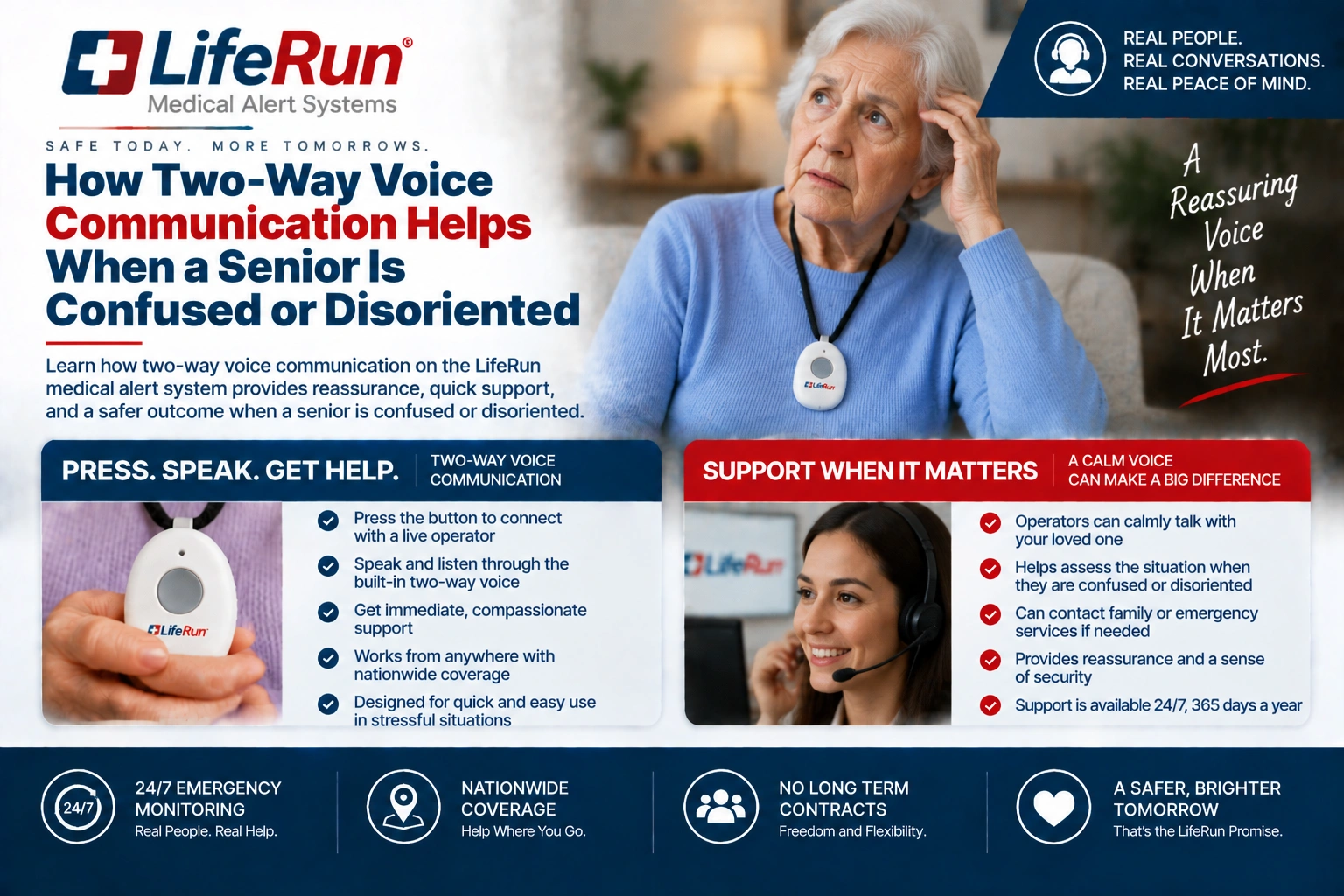
Two-way voice communication for seniors can be especially useful when an emergency is confusing, frightening, or difficult to explain. At LifeRun, our medical alert devices are designed so the wearer can speak with the monitoring center through the device instead of needing to find a phone, open an app, or dial a number after an […]
Two-way voice communication for seniors can be especially useful when an emergency is confusing, frightening, or difficult to explain. At LifeRun, our medical alert devices are designed so the wearer can speak with the monitoring center through the device instead of needing to find a phone, open an app, or dial a number after an […]
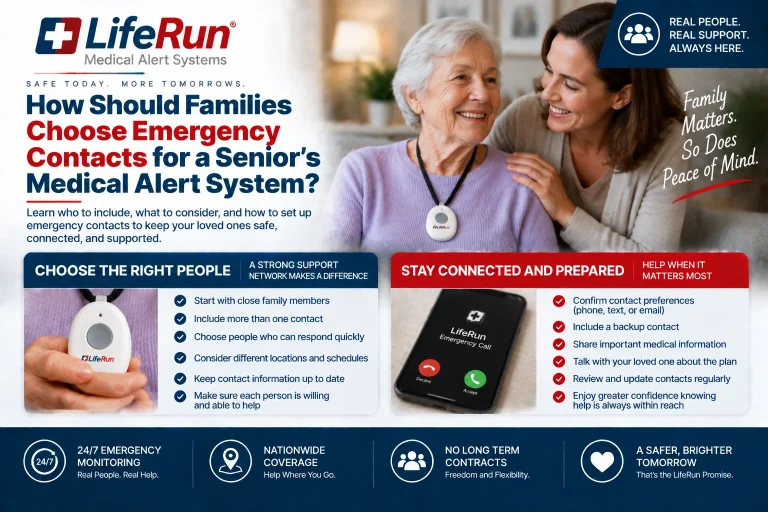
Choosing emergency contacts for a senior medical alert system is part of building the response plan behind the device. At LifeRun, we do not look at an emergency contact list as a formality. The list should identify people who are reachable, understand the senior’s situation, can communicate clearly with our monitoring team, and know what […]
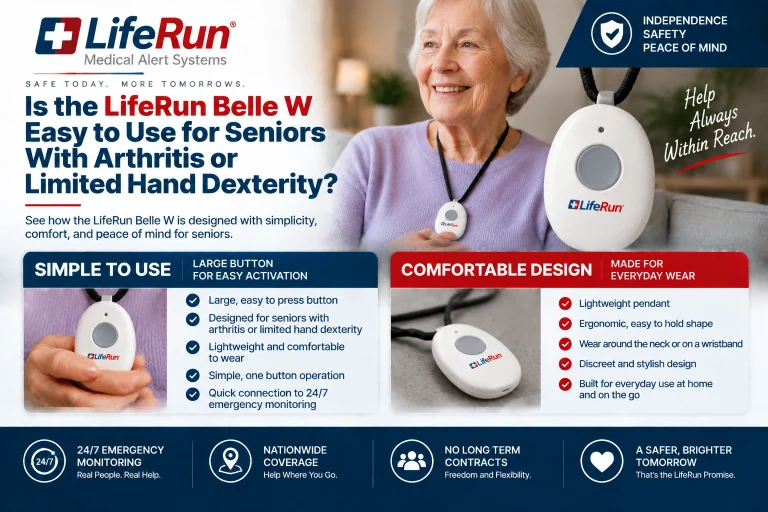
The LifeRun Belle W for seniors with arthritis should be evaluated around the movements a person actually needs to perform every day, not around a generic claim that one device is “easy” for everyone. We designed the Belle W as a lightweight, wrist-worn mobile personal emergency response system, but arthritis, reduced grip strength, finger stiffness, […]
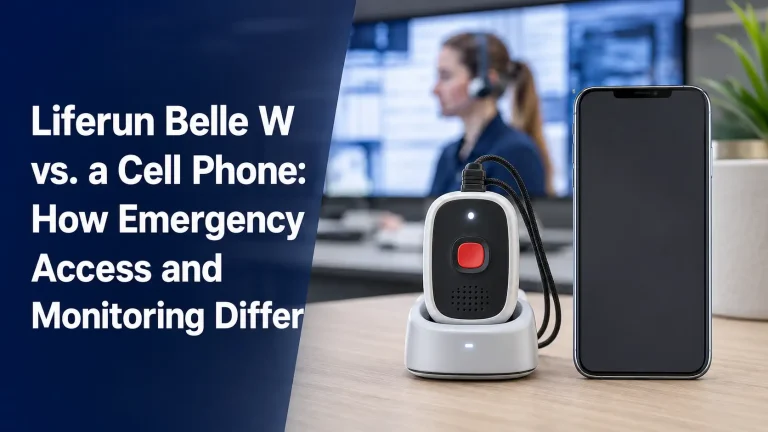
The main difference in LifeRun Belle W vs. a cell phone emergency access is what happens after you decide you need help. A cell phone can be used to call 911 directly when the phone is available, usable, and connected to a network. Belle W provides a dedicated wearable emergency button that connects through its built […]
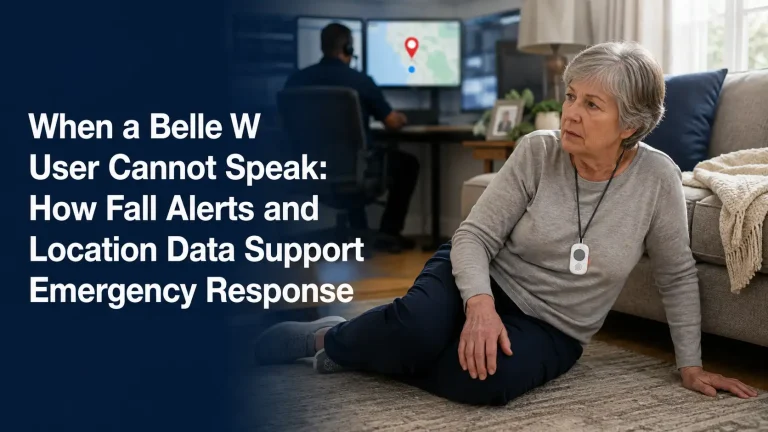
If a Belle W wearer cannot speak after an emergency, fall alerts and location data can provide the monitoring center with information that does not depend entirely on a verbal explanation from the user. Belle W offers optional fall detection, WiFi location services, proprietary homing technology, and 24/7 access to monitoring operators through its cellular […]
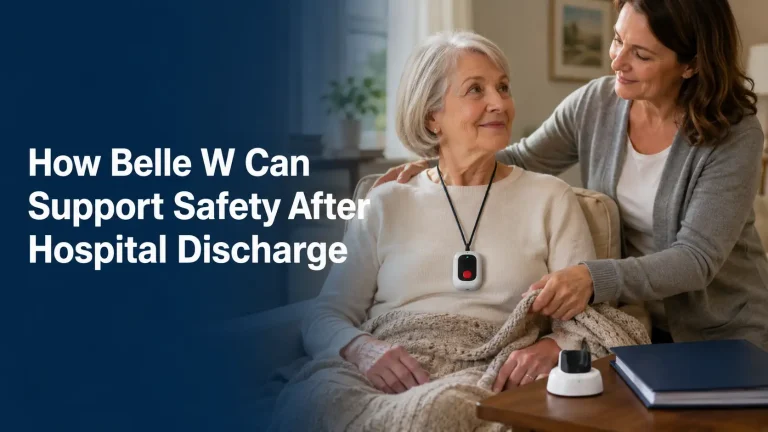
Returning home after a hospital stay can involve new medications, follow-up appointments, changes in mobility, and instructions about warning signs to watch for. AHRQ recommends that hospital discharge safety planning include the patient and family, medication review, warning signs, follow-up appointments, and a clear understanding of what life at home will involve. A LifeRun Belle […]
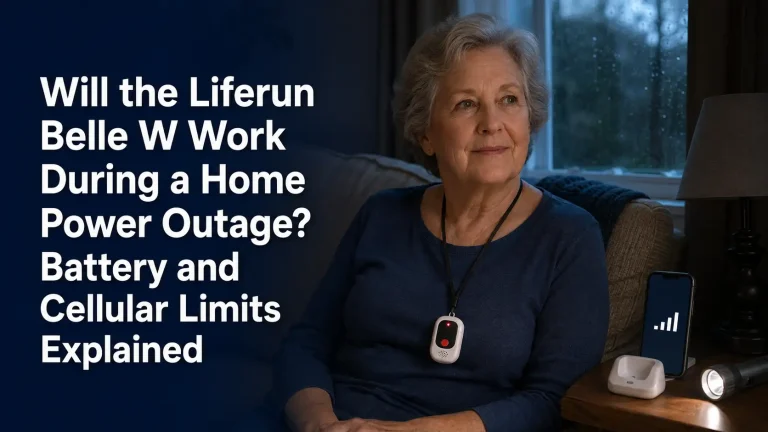
Yes, a charged LifeRun Belle W can continue operating during a home power outage because the wearable device runs from its own rechargeable battery and does not require a home landline or base station. However, that does not mean it is completely independent of outside infrastructure. The device must still have battery power remaining and […]
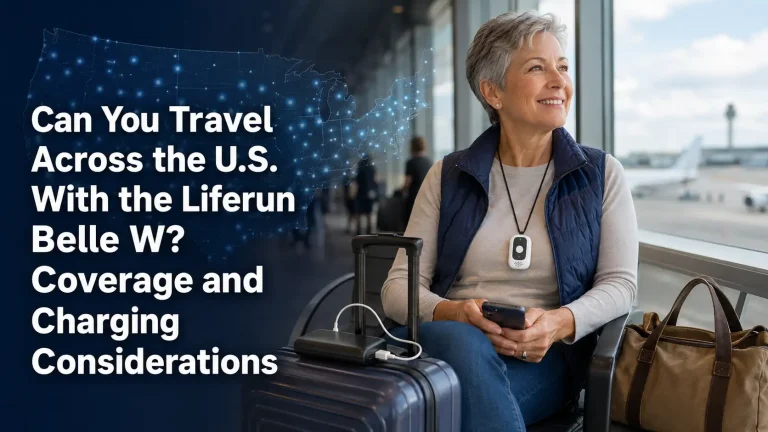
Yes, traveling across the United States with the Liferun Belle W is possible because Belle W is a mobile medical alert device that does not depend on a home landline or fixed base station. It is certified for use on Verizon and AT&T 4G LTE networks and can connect to LifeRun’s monitoring service while you […]
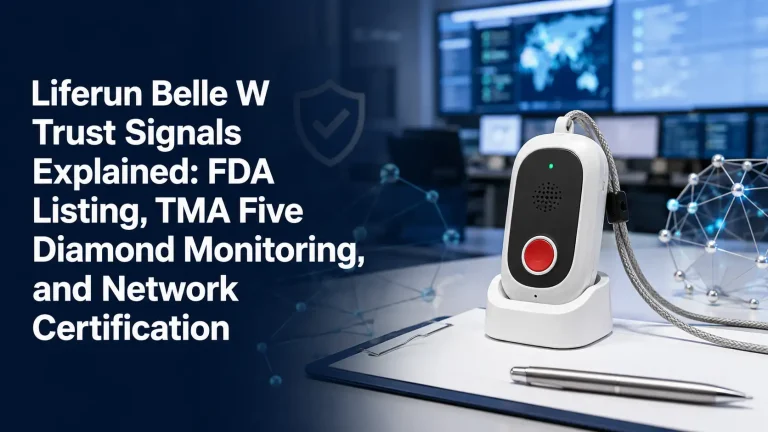
When you compare medical alert devices, terms such as FDA listed, TMA Five Diamond, and network certified can sound reassuring without necessarily telling you what was actually evaluated. The Liferun Belle W trust signals are easier to assess when each one is separated and connected to the part of the service it actually describes. In […]