Returning home after a hospital stay can involve new medications, follow-up appointments, changes in mobility, and instructions about warning signs to watch for. AHRQ recommends that hospital discharge safety planning include the patient and family, medication review, warning signs, follow-up appointments, and a clear understanding of what life at home will involve.
A LifeRun Belle W can add another practical layer to that plan by keeping a monitored emergency call button on the wearer. It does not replace the discharge plan, a caregiver, home health services, prescribed treatment, or direct access to 911. Its role is narrower: helping a person reach LifeRun’s monitoring service from a wearable device when cellular coverage is available.
Where Belle W Fits Into Hospital Discharge Safety at Home
Belle W can complement a post-discharge safety plan by providing wearable access to monitored support while the person adjusts to recovery at home.
Why Can the First Days at Home Require Extra Planning?
Hospital discharge is a transition from one care environment to another. AHRQ notes that safe discharge planning involves transferring important information from clinicians to the patient and family, including medications, warning signs, test results, follow-up appointments, and expectations for life at home.
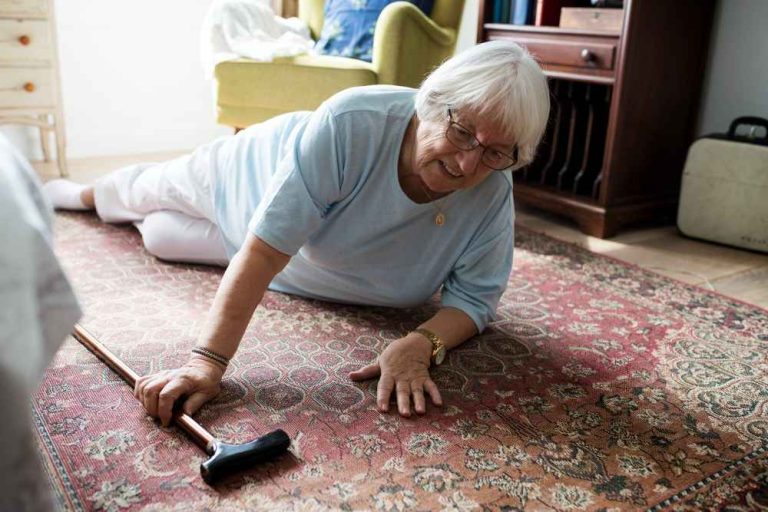
Mobility can also be different after hospitalization. AHRQ has noted that illness, medications, treatments, and decreased activity during a hospital stay can leave some patients weak or unsteady, even when they were previously independent.
That does not mean everyone leaving a hospital needs a medical alert device. The need depends on the person’s discharge instructions, mobility, home environment, available caregivers, and clinician recommendations.
Where Belle W can become relevant is access to help.
If someone is spending periods of time alone after coming home, a wrist-worn emergency button provides a different access path than depending only on a phone that may not always be physically within reach.
How Does Belle W Provide Access to Help?
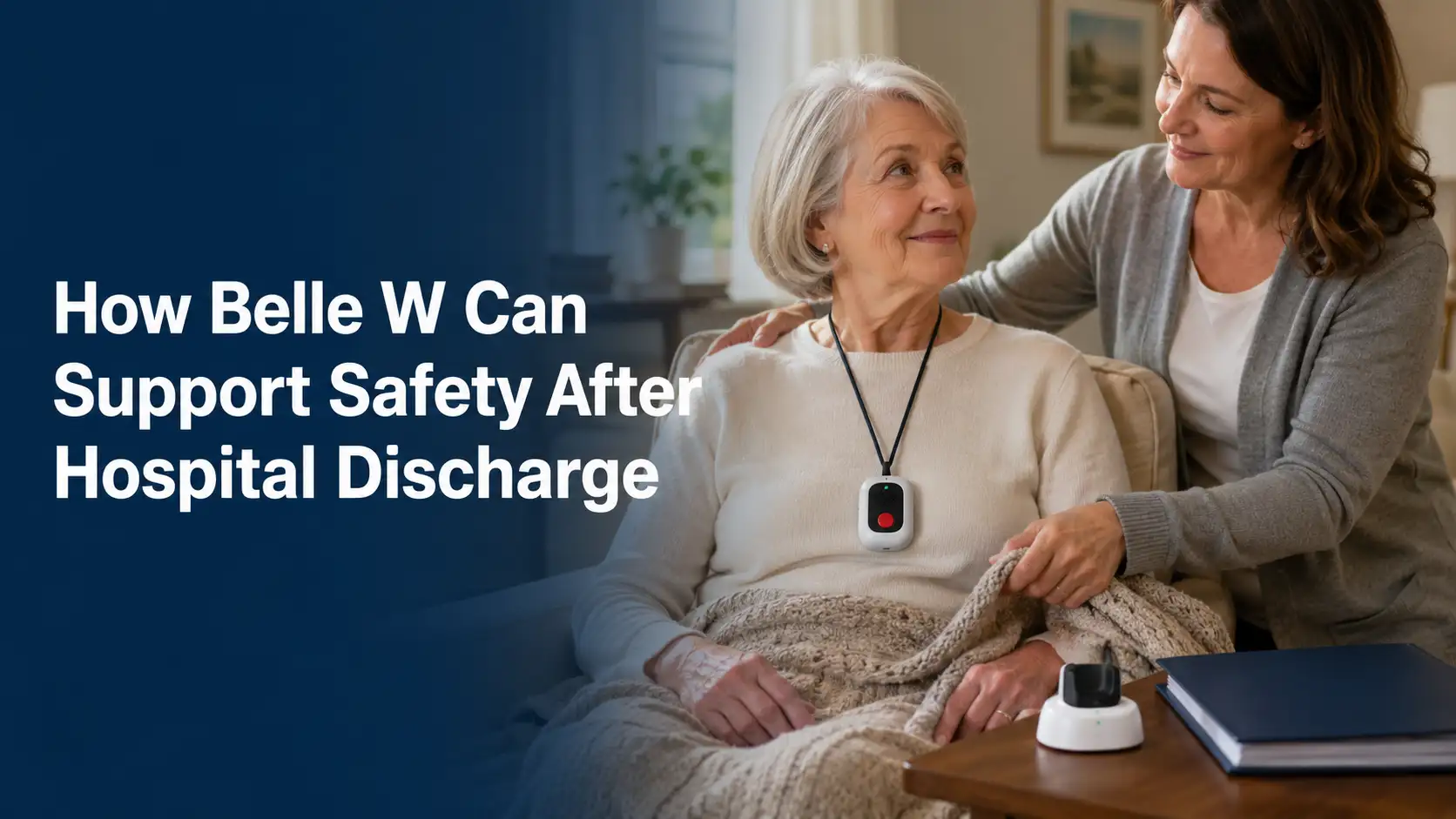
Belle W is a mobile personal emergency response system, or mPERS, designed to be worn on the wrist.
Our Belle W device includes a dedicated call button, built-in speaker and microphones, and two-way communication with our trained monitoring specialists. Pressing the call button initiates communication with our monitoring center.
This matters after discharge because the wearer does not first need to locate a separate home base station or landline.
We designed Belle W to:
- does not require a landline or home base station,
- operates through cellular service,
- provides 24/7 operator access,
- and can be used at home or away where compatible cellular coverage is available.
That does not guarantee a particular medical outcome. It simply creates a dedicated monitored communication path when the device is charged, being worn, and connected to supported cellular service.
Why Can a Wrist-Worn Button Matter During Recovery?
A smartphone can call 911, and Belle W should not be presented as a replacement for that capability.
The practical difference is where the emergency control is located.
Belle W weighs approximately 1.2 ounces with its wrist strap, according to LifeRun’s current FAQ, and is intended for regular wrist wear.
For someone temporarily moving more slowly after returning home, having the emergency button physically on the wrist may be easier than relying entirely on a phone sitting:
- on a bedside table,
- charging in another room,
- inside a bag,
- or elsewhere in the home.
Whether that difference is useful depends on the individual. Someone who keeps a phone accessible at all times may have different needs from someone who regularly leaves it behind when moving around the house.
The appropriate question is not whether Belle W is automatically safer than a phone. It is whether wearable monitored access fills a gap in the person’s discharge plan.
How Can Optional Fall Detection Add Another Alert Path?
Belle W includes optional fall detection with user cancellation. We can direct qualifying fall alerts through our monitoring platform to PERS operators.
This creates two potential ways to initiate an alert:
Manual alert: The wearer presses the Belle W call button.
Fall-detection alert: The enabled fall-detection feature identifies a qualifying event and sends an alert into the monitoring workflow.
This distinction may be worth discussing when discharge instructions indicate mobility limitations or when the patient and family are concerned about falls.
However, fall detection is not fall prevention.
It does not make walking safer, replace a mobility aid, remove hazards from the home, or replace a clinician’s fall-prevention recommendations. It also should not be described as detecting every fall.
AHRQ’s fall-prevention framework emphasizes assessing an individual’s fall risk, creating a personalized plan, and consistently following that plan. A medical alert device can complement such planning, but it is not the plan itself.
What Happens After a Belle W Alert?
Belle W connects the user with LifeRun’s monitoring operation rather than functioning as a direct substitute for a hospital, physician, nurse, or 911 dispatcher.
We provide access to monitoring operators 24 hours a day. Our operators can communicate through Belle W, locate the user, communicate with contacts, and arrange appropriate help according to the situation.
That monitored pathway can be useful after discharge when family members and the wearer have already decided how different situations should be handled.
For example, LifeRun’s setup process can include emergency contact information and response preferences.
But a monitoring service should not be used to reinterpret medical discharge instructions.
If a hospital tells the patient to call 911 immediately when a particular warning sign occurs, that instruction remains the relevant medical guidance. A medical alert device does not override it.
Can Belle W Help If the Person Moves Around Outside the Home?
Belle W is not limited to one room or to the range of a fixed home base station.
We designed Belle W for use on certified Verizon and AT&T 4G LTE networks, so it can be used at home or on the go where compatible cellular coverage is available.
We also include WiFi location services and proprietary homing technology among Belle W’s capabilities. These tools help our monitoring center determine the wearer’s location to support emergency response.
That can become relevant as someone begins returning to ordinary activities after discharge.
Again, there is an important limitation: location features do not eliminate the need for cellular connectivity. If supported cellular service is unavailable, the device may be unable to establish its monitoring connection.
How Should Battery Life Fit Into a Post-Discharge Routine?
An emergency device only provides its intended communication function while it has power.
Belle W uses a rechargeable battery. Our product specifications indicate that it can last:
- up to seven days in Ready Mode
- approximately one to two days in Always On mode.
A charging routine should therefore become part of using the device after discharge.
This is especially important when the wearer is also adapting to:
- new medication schedules,
- therapy appointments,
- mobility instructions,
- follow-up visits,
- and other changes to normal routines.
The device has LED indicators for call and battery status, and our published battery guidance explains that a fully depleted device cannot connect to our monitoring service.
Families should not interpret “up to seven days” as a guarantee that the battery will always last exactly seven days. Operating mode and remaining charge matter.
What Belle W Cannot Replace After Hospital Discharge
This is the most important boundary.
Belle W can provide emergency access and monitoring support, but it cannot replace the clinical elements of a safe transition home.
AHRQ identifies several core discharge responsibilities, including:
- understanding medications,
- recognizing warning signs,
- knowing test results and next steps,
- attending follow-up appointments,
- and knowing whom to contact with questions or problems.
Belle W does not:
- manage medications,
- diagnose a complication,
- determine whether a symptom is serious,
- provide nursing care,
- provide physical therapy,
- replace home health services,
- prevent falls,
- guarantee emergency service arrival,
- or replace instructions from the patient’s healthcare team.
It works best conceptually as one communication layer inside a broader discharge safety plan.
Decide on Belle W Before the Person Is Home Alone
If Belle W is being considered for someone leaving the hospital, the useful conversation should happen around the person’s real post-discharge situation.
Ask:
Is the person expected to spend time alone?
Will they be moving between rooms without another person nearby?
Can they reliably keep a cell phone accessible?
Has the clinical team identified mobility or fall concerns?
Who should be contacted if an alert occurs?
Can the person maintain the Belle W charging routine?
Is AT&T or Verizon cellular coverage available where they live?
Those questions keep the decision tied to practical needs rather than treating a medical alert device as a general solution to every risk after hospitalization.
A LifeRun Belle W can support hospital discharge safety by keeping monitored emergency access on the wearer’s wrist, providing two-way communication, and offering optional fall detection and location capabilities. What it cannot do is replace the medical plan created by the discharge team.
For questions about Belle W setup, monitoring, battery life, or emergency contacts, LifeRun lists 1-800-421-3366 as its customer contact number.
FAQs
Should someone get Belle W before leaving the hospital?
That depends on the individual’s needs and discharge plan. Belle W may be worth considering when wearable access to professional monitoring would fill a practical gap at home. Decisions about medical supervision, mobility assistance, home health services, or other clinical support should remain with the healthcare team.
Does Belle W prevent falls after discharge?
No. Belle W includes optional fall detection, but that is an alert feature rather than a fall-prevention treatment. AHRQ recommends individualized fall-risk assessment and prevention planning when fall risk is a concern.
Can Belle W work without a cell phone?
Yes. Belle W has its own cellular communication capability, speaker, microphones, and call button. We designed it so no landline or home base station is required.
How long does Belle W last between charges?
We state that Belle W can last up to seven days in Ready Mode and approximately one to two days in Always On mode. Actual remaining battery time depends on the device’s operating mode and charge level.
Does Belle W replace calling 911 after discharge?
No. Belle W connects first to LifeRun’s monitoring workflow. Patients should continue following the emergency and warning-sign instructions provided by their healthcare team, including instructions to call 911 directly when specified.