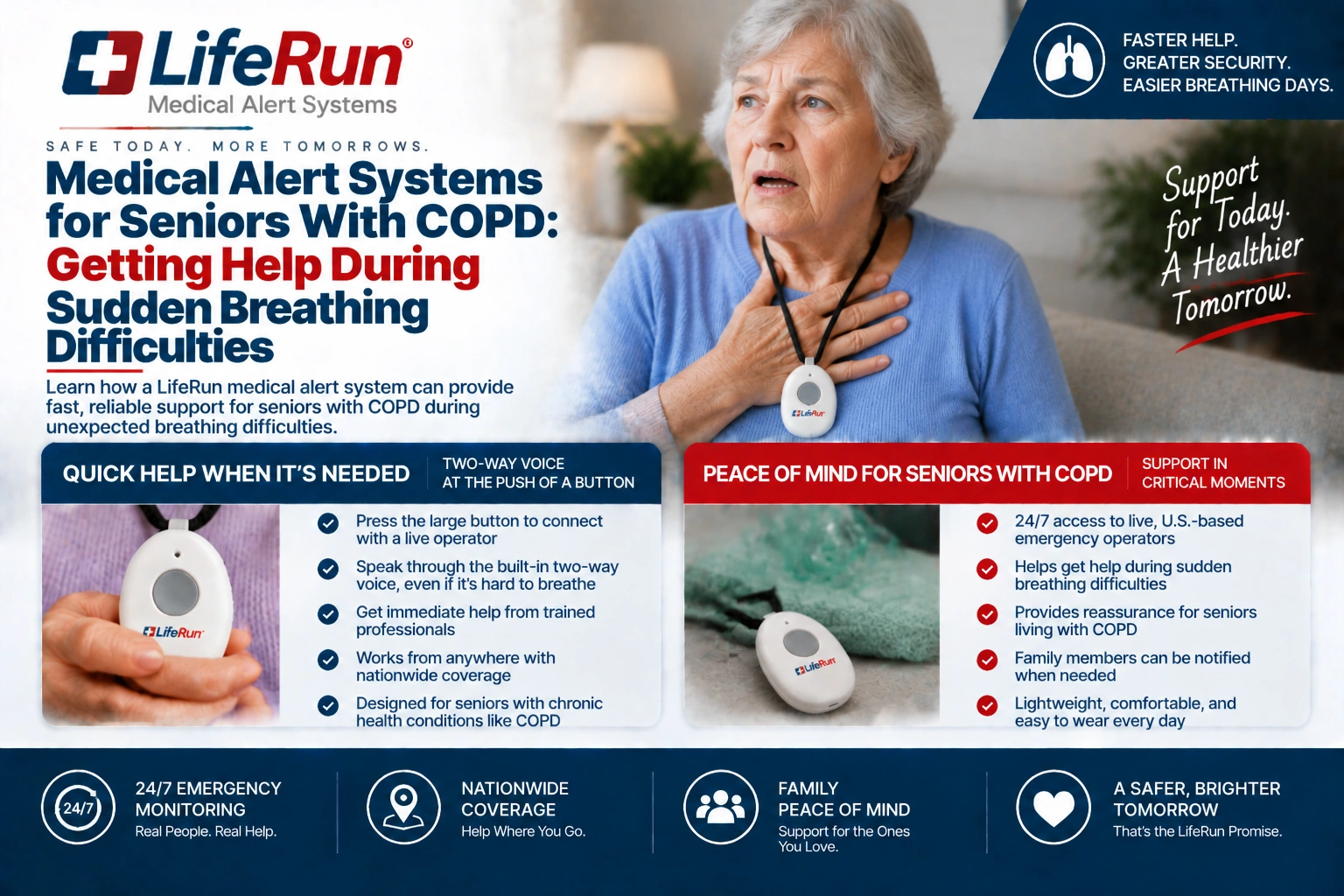
Medical alert systems for seniors with COPD can provide a direct way to request help when sudden breathing difficulty makes reaching a phone or explaining a situation harder. At LifeRun, we frame that role carefully. A medical alert device does not treat COPD, monitor lung function, deliver oxygen, or replace a clinician’s action plan. It provides an emergency communication pathway when the wearer needs assistance.
The National Heart, Lung, and Blood Institute explains that COPD flare-ups can involve worsening breathing and other symptoms, and that some serious signs warrant calling 911. For a senior living alone or spending time away from family, a wearable device with a dedicated help button, two-way voice, 24/7 monitoring, and location capabilities can support the emergency plan the senior has already established with healthcare professionals.
Know the Difference Between COPD Care and Emergency Communication
COPD management belongs with the senior’s healthcare team. Medications, inhalers, oxygen, pulmonary rehabilitation, and individualized action plans are clinical matters. Our role is different. LifeRun provides monitored medical alert technology that can help the wearer reach a monitoring specialist and coordinate emergency assistance when needed.
A Medical Alert Device Does Not Measure How Severe a Flare-Up Is
The wearable cannot determine whether shortness of breath is caused by COPD, infection, a heart problem, anxiety, or another condition. It should never be used as a substitute for medical evaluation. If symptoms are worsening, the senior should follow the instructions provided by their healthcare team and use emergency services when the situation meets emergency criteria.
NHLBI Identifies Signs That Can Require 911
NHLBI advises calling 911 for serious COPD-related situations such as having a hard time catching the breath or talking, blue or gray lips or fingernails, reduced mental alertness, a very fast heartbeat, or when the recommended treatment for symptoms is not working. Families should use that authoritative guidance together with the senior’s own clinician-directed emergency plan.
Do Not Wait for a Monitoring Device to Provide Medical Judgment
If a senior is experiencing an emergency, the goal is to activate the established emergency response. The medical alert system can be one way to make that request, but it is not a triage instrument. It does not replace 911, a physician, an inhaler, prescribed oxygen, or any other treatment.
Why a Wearable Help Button Can Matter During Breathing Difficulty
Severe shortness of breath can make ordinary tasks feel harder. A senior may not want to walk across a room to find a phone or navigate a touchscreen while trying to breathe. A worn medical alert device can keep the help control on the body, reducing the number of steps required to start an emergency call.
One Dedicated Activation Can Be Simpler Than Finding a Phone
The Belle W uses a dedicated call button and built-in two-way voice. After the call is initiated and connected, the wearer can communicate through the device. This design can be useful when the senior wants a direct emergency pathway without locating a handset, although the person still needs to be able to activate the device or rely on another supported alert mechanism when applicable.
Two-Way Voice Can Reduce the Need for a Long Explanation
A senior who is short of breath may not be able to speak in long sentences. Two-way voice lets the monitoring specialist ask basic questions and hear what the wearer can communicate. The specialist can then follow the response protocol using available information. We do not claim that voice communication can assess oxygen levels or determine the medical cause of breathlessness.
Location Features Can Be Important Away From Home
COPD symptoms do not occur only in the house. A senior may be outside, shopping, visiting family, or traveling locally when breathing suddenly becomes difficult. Liferun monitoring plans include GPS location tracking, and the Belle W uses GPS and cellular location data to support emergency response.
Location Data Can Support Dispatch When the Wearer Is Unsure Where They Are
If a senior cannot clearly state a location, usable device location data can provide additional context to the monitoring center. This is especially relevant when breathlessness, distress, or confusion makes communication difficult. Location technology is supportive, not infallible, so families should not treat it as a guarantee of exact positioning in every environment.
Prepare the Device Around the Senior’s Existing COPD Action Plan
The strongest setup starts with the plan the senior already uses with their healthcare team. We do not create the COPD action plan. Instead, families can make sure the medical alert device and emergency contact protocol fit around it.
Decide in Advance What Information Contacts Should Know
Emergency contacts may need the senior’s address, preferred hospital or clinician information if the senior chooses to share it, and the location of important care documents. Keep medical details accurate and avoid relying on an outdated informal list. The senior should decide what personal information is appropriate to share.
Practice the Help Call When the Senior Is Feeling Well
A calm practice session is easier than learning the device during respiratory distress. The wearer should know where the call button is, that a monitoring specialist may speak through the device, and how to answer briefly. A simple statement such as “I am having trouble breathing” can communicate the immediate problem without requiring a long explanation.
Keep the Device Available, Charged, and Part of the Routine
A medical alert wearable cannot help if it is left in another room or has no power. The Belle W is designed for wrist wear and has an IP67 water-resistance rating. Its battery lasts up to seven days in Ready Mode and one to two days in Always On mode. Families should choose a charging routine based on the operating mode rather than assuming the longest possible interval.
Wearability Matters for Seniors Who Move Between Rooms
Keeping the device on the wrist can make the emergency control more consistently available than a phone placed on a counter or nightstand. The wearer should still confirm that the strap is comfortable, the button is accessible, and the device fits normal daily activities.
Water Resistance Can Support Bathroom Wear
The Belle W is rated IP67 for water resistance, which supports use in wet everyday environments. We still recommend following the device instructions and avoiding claims beyond the published rating. Bathroom wear is relevant because a senior with COPD may want the same emergency communication access while showering as in other parts of the home.
Use a Medical Alert System as One Layer of Preparedness
Our goal at LifeRun is to provide a direct, monitored way to request help, not to replace COPD treatment. Families can review the Belle W, compare our medical alert products, and review current monitoring plans when building a broader emergency plan.
For medical guidance about COPD symptoms, treatment, or an action plan, use the senior’s healthcare team and authoritative resources such as the National Heart, Lung, and Blood Institute. For questions about LifeRun monitoring, device features, emergency contacts, or setup, call us at 1-800-421-3366.
Frequently Asked Questions
Can a LifeRun medical alert system treat a COPD flare-up?
No. A medical alert system does not treat COPD or replace medication, oxygen, 911, or professional medical care. It provides a way to request monitored assistance.
When should someone with COPD call 911?
NHLBI lists serious signs such as difficulty catching your breath or talking, blue or gray lips or fingernails, reduced mental alertness, a very fast heartbeat, or recommended treatment not working. Individual instructions from the senior’s healthcare team also matter.
How can two-way voice help during shortness of breath?
It lets the wearer communicate through the device after connecting with the monitoring center, which can reduce the need to find a separate phone.
Does GPS diagnose or monitor COPD?
No. GPS provides location information. It does not measure breathing, oxygen level, lung function, or the severity of a COPD flare-up.
Should a senior practice using the medical alert device?
Yes. Practicing while feeling well can make the button, voice connection, and emergency contact process more familiar before a stressful situation.