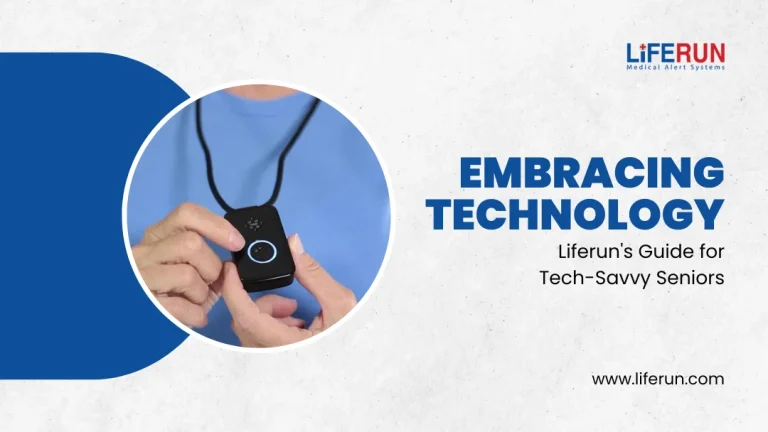
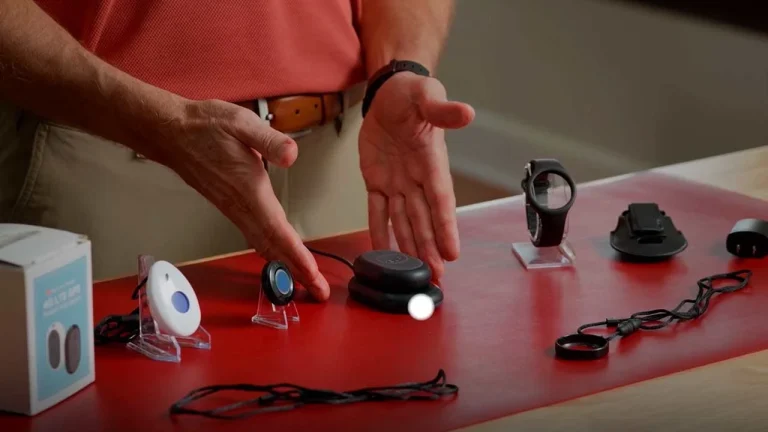
Yes, a charged LifeRun Belle W can continue operating during a home power outage because the wearable device runs from its own rechargeable battery and does not require a home landline or base station. However, that does not mean it is completely independent of outside infrastructure. The device must still have battery power remaining and access to a supported cellular network to connect with monitoring.
That distinction matters during storms and extended outages. Losing electricity inside your home does not automatically shut down Belle W, but a depleted battery or loss of cellular service can prevent the device from connecting.
How the LifeRun Belle W Works When Household Electricity Goes Out
Understanding how Belle W uses its rechargeable battery and cellular connection can help you know what to expect when household power is unavailable.
Does Belle W Shut Off When the Power Goes Out?
No. A home power outage does not automatically shut off Belle W.
Belle W is a mobile personal emergency response system (mPERS). We explain that it does not require a home phone line or base station. Instead, the device has its own rechargeable battery and uses cellular connectivity to communicate with the monitoring service.
This makes Belle W different from a home based alert system that depends on equipment plugged continuously into a wall outlet.
If electricity goes out while you are wearing a properly charged Belle W, the loss of household power itself is not what determines whether the device can operate.
Two other factors become more important:
- How much battery charge remains.
- Whether compatible cellular service remains available.
Understanding those two limits gives you a much more accurate picture of outage protection.
How Long Can the Belle W Battery Last During an Outage?
The manufacturer states that the Belle W rechargeable battery can last up to seven days in Ready Mode. In Always On mode, the stated battery duration is approximately one to two days. LifeRun also describes Belle W as providing up to seven days on a charge and says a full recharge takes approximately two to three hours.
The phrase up to seven days is important.
It should not be interpreted as a guaranteed seven days of operation in every situation. Operating mode, device use, battery condition, and other factors can affect how long the remaining charge lasts.
For example, there is a significant difference between:
- a power outage beginning shortly after the device was fully charged, and
- an outage beginning when the battery is already close to needing a recharge.
This is why the battery’s condition before an outage matters just as much as its maximum duration.
Can You Recharge Belle W While the Home Power Is Out?
Belle W uses a charging cradle and charging contacts to recharge its internal battery. LifeRun’s device information identifies the charging pins and cradle as part of the charging process.
During a household power outage, the important limitation is simple: the charging equipment still needs an available power source to recharge the device.
The Belle W battery may therefore keep the device operating after household electricity fails, but the battery does not provide unlimited outage operation.
If an outage lasts long enough for the battery to become depleted and no suitable power source is available for the charger, the device cannot continue operating indefinitely.
LifeRun’s own battery guidance makes the consequence clear: a completely depleted medical alert device cannot connect to monitoring.
For someone who lives in an area with frequent or extended power outages, it is worth asking LifeRun what charging and backup power arrangements are compatible with the supplied Belle W charging equipment rather than assuming that any third party charger or battery system can be used.
Does Belle W Need Your Home WiFi During an Outage?
Belle W’s emergency connection does not depend on your home internet connection.
LifeRun is certified on Verizon and AT&T 4G LTE networks, and No landline or base station is required. Freeus, the Belle W manufacturer, also identifies Verizon and AT&T 4G LTE certification for the device.
This distinction can be helpful during an outage.
Your home WiFi router may stop functioning when household electricity is unavailable, but that does not automatically mean Belle W loses its emergency communication path. Its connection to monitoring is based on supported cellular service rather than your household broadband router.
Belle W also includes WiFi based location services, but that should not be confused with requiring your home WiFi connection to make the device’s cellular emergency communication work.
What Happens If the Cellular Network Also Goes Down?
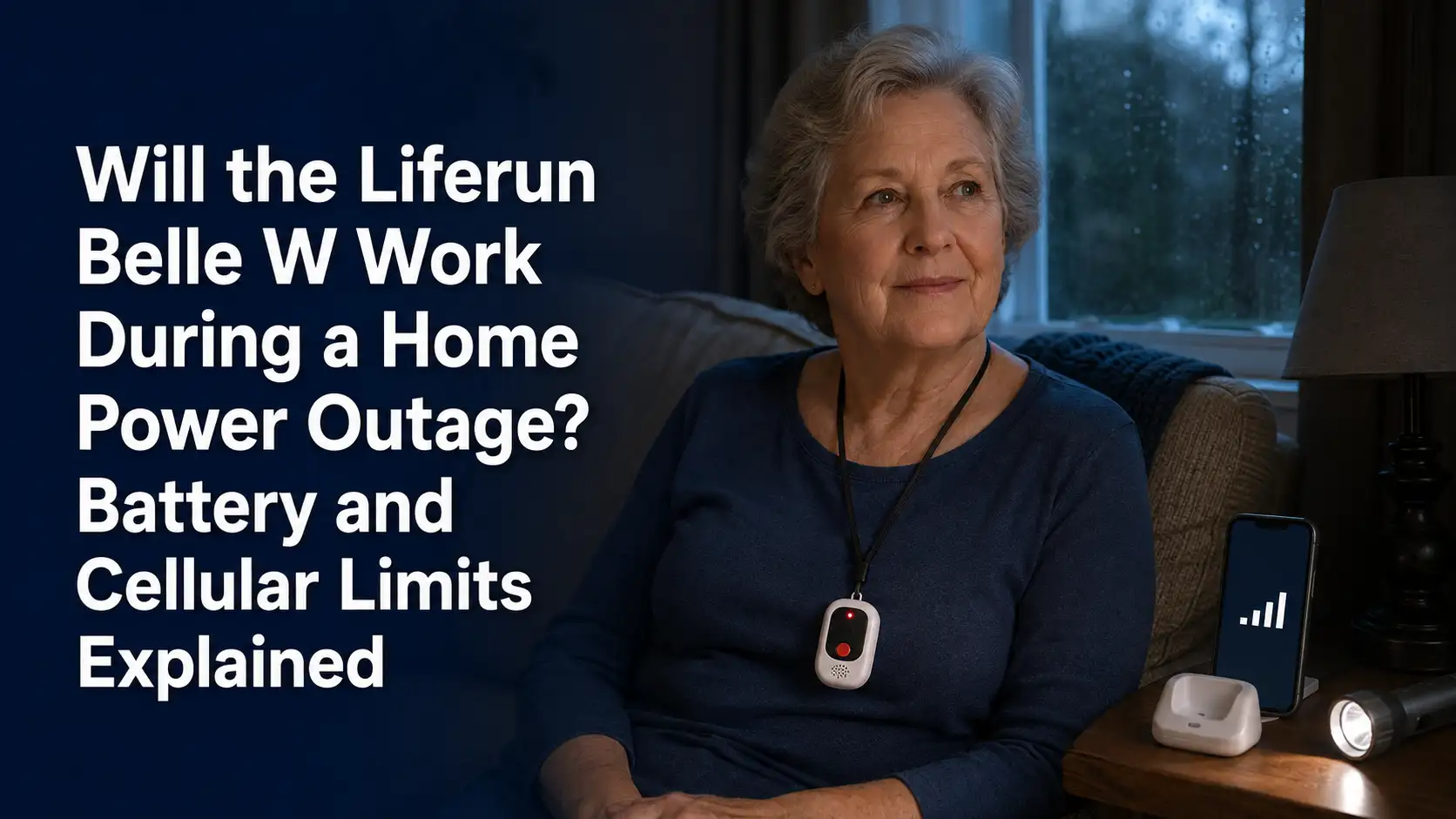
This is the most important limitation to understand.
Belle W depends on cellular connectivity to communicate with the monitoring service. LifeRun device connects users to the monitoring center anywhere with cellular coverage.
A local household power outage and a cellular outage are not necessarily the same event. The Belle W may remain charged while local cellular service continues operating.
However, severe weather, infrastructure damage, extended commercial power loss, or other network problems can also affect wireless communications.
The FCC has recognized that access to emergency communications can be jeopardized when mobile wireless service itself is not functioning. Wireless infrastructure may have backup power arrangements, but a medical alert device cannot independently guarantee that the surrounding carrier network will remain available throughout every outage.
This means AT&T and Verizon network certification describes network compatibility, not guaranteed cellular coverage during every emergency or power failure.
If Belle W has battery power but cannot reach a compatible cellular network, it may not be able to connect with the monitoring center until service becomes available again.
Does Having Two Supported Networks Eliminate the Cellular Risk?
No.
Belle W is certified for operation on AT&T and Verizon 4G LTE networks, which gives the device compatibility with two major network environments.
That is useful information when evaluating the device, but it should not be turned into an outage guarantee.
Network certification does not mean:
- both networks are available at every address,
- cellular towers cannot lose service,
- every outage will leave at least one network operating,
- or an emergency connection can never be interrupted.
Before relying on any cellular medical alert system, the practical question is whether supported cellular service is normally available in the places where the wearer spends time.
What Should Belle W Users Do Before Severe Weather?
A few practical checks can reduce avoidable battery problems.
Start by checking the device before conditions that could cause an outage. Belle W includes LED indicators for call and battery status, including a red battery light used during charging and status indication.
If severe weather is expected, having the device well charged gives you more available battery capacity if household electricity later becomes unavailable.
You should also understand which limitations you cannot control. A fully charged device still needs compatible cellular service. Likewise, a functioning cellular network does not help if the Belle W battery has become completely depleted.
Think of the system as two requirements working together:
Battery power + cellular connectivity = ability to reach the monitoring connection.
Both matter.
What If the Outage Lasts Several Days?
A longer outage changes the calculation.
If Belle W begins the outage with a strong charge and operates in a mode associated with longer battery duration, the rechargeable battery may provide a meaningful period of continued use. The published maximum, however, remains up to seven days in Ready Mode, not an unlimited backup period.
For prolonged outages, users need to think about:
- remaining Belle W battery charge,
- whether a compatible charging power source is available,
- whether AT&T or Verizon cellular coverage remains functional,
- and whether local communications infrastructure has also been affected.
If your household regularly experiences long power interruptions, discuss that situation with LifeRun during setup so you understand the device’s charging requirements and cellular limitations before an emergency occurs.
A Power Outage Does Not Automatically Disable Belle W
The main advantage during a household outage is that the LifeRun Belle W does not depend on household electricity continuously while it is being worn.
Its rechargeable battery powers the wearable device, and its monitoring connection uses cellular service rather than a landline, fixed home base station, or home internet connection.
But two limits should always remain clear.
The battery eventually needs recharging, and the emergency communication path still depends on available cellular coverage.
A charged Belle W can therefore continue operating when the lights go out, but no cellular medical alert device should be described as completely independent of power and communications infrastructure.
For questions about Belle W charging, operating modes, cellular coverage, or how to prepare the device for outages in your area, contact LifeRun at 1-800-421-3366.
FAQs
Will Belle W work if my home’s electricity goes out?
Yes, provided the Belle W still has battery charge and compatible cellular service is available. The device uses its own rechargeable battery and does not require a home landline or base station.
Does Belle W need WiFi during a power outage?
Belle W does not rely on your home WiFi connection for its cellular monitoring connection. It operates on certified Verizon and AT&T 4G LTE networks.
How long will Belle W run without household electricity?
Freeus states that Belle W lasts up to seven days in Ready Mode and approximately one to two days in Always On mode. Actual remaining operating time during an outage depends partly on how much battery charge the device has when the outage begins.
What happens if the Belle W battery dies?
A fully depleted device cannot connect to monitoring. The device needs to be recharged before normal operation can continue.
Will Belle W work if the cellular towers lose service?
Belle W requires compatible cellular coverage to connect with monitoring. If the relevant cellular service is unavailable, having battery power alone does not guarantee that the device can establish an emergency monitoring connection.