Choosing emergency contacts for a senior medical alert system is part of building the response plan behind the device. At LifeRun, we do not look at an emergency contact list as a formality. The list should identify people who are reachable, understand the senior’s situation, can communicate clearly with our monitoring team, and know what they may need to do if an alert occurs.
Our medical alert service is built around 24/7 monitoring and two-way voice communication, with monitoring specialists able to contact family and dispatch emergency services as needed. A well-planned contact list helps families decide in advance who should be called, in what order, and what each person is realistically able to handle. That preparation can reduce confusion during a stressful event.
Start With Availability, Not Family Hierarchy
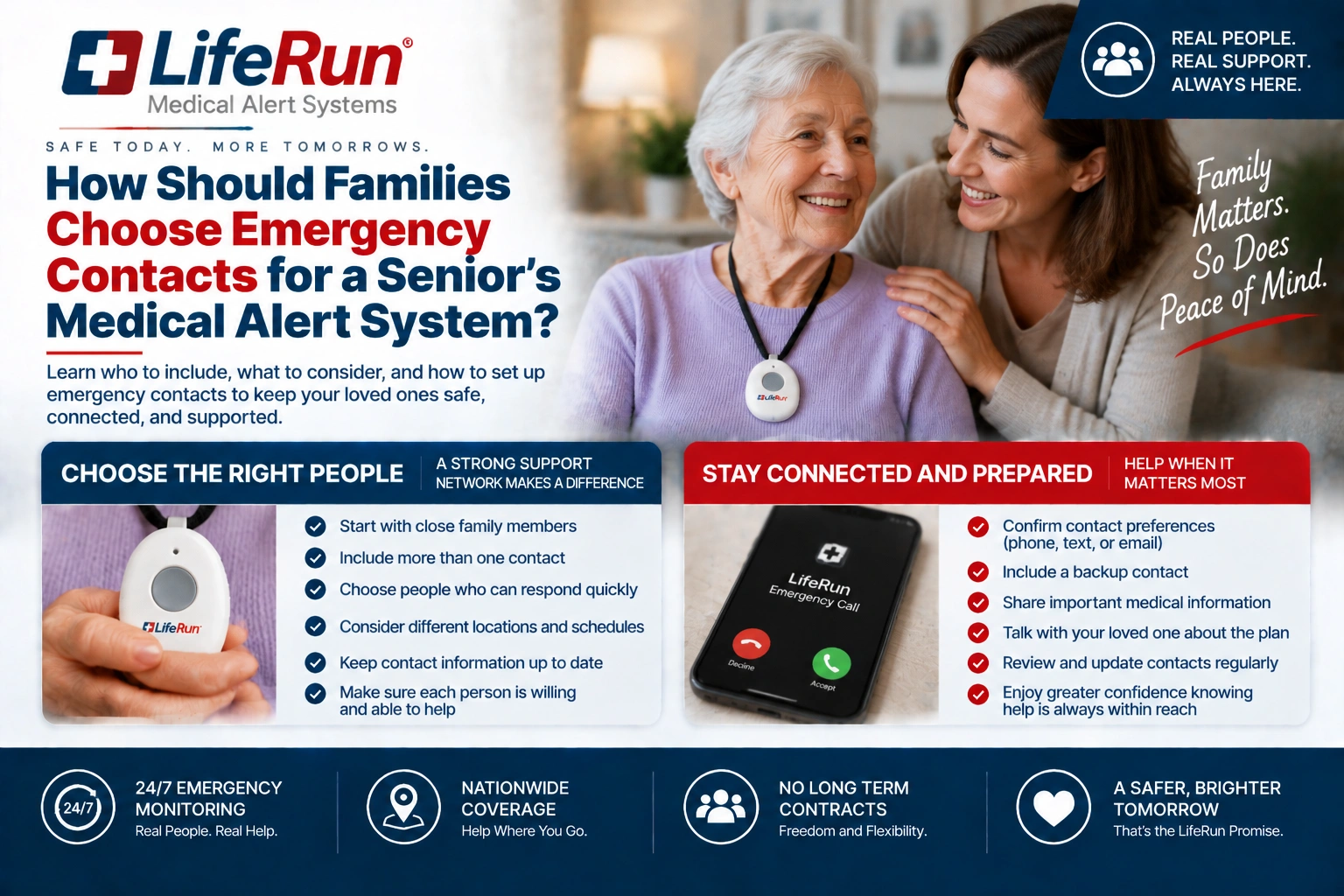
The first emergency contact does not have to be the oldest child, closest relative, or person who manages the senior’s finances. The better question is who is usually reachable and prepared to respond. A contact who lives nearby but rarely answers an unknown number may be less useful than someone farther away who reliably picks up and can coordinate the next step.
Choose Someone Who Answers the Phone Consistently
Emergency calls do not follow a convenient schedule. Families should choose contacts who are comfortable receiving unexpected calls and who understand that a monitoring-center call may require prompt attention. If one person works in an environment where phones are inaccessible for long periods, that limitation should influence the call order.
Include More Than One Reliable Person
A single contact can be unavailable, traveling, sleeping, driving, or dealing with another obligation. A small ordered list gives the response plan redundancy without making it unnecessarily complicated. Families should know who is first, who is next, and when emergency services should be involved according to the established protocol.
Assign a Primary and Backup Contact
A primary contact should be the person most likely to answer and make decisions quickly. A backup contact should be equally informed and capable of stepping in when the first person cannot be reached. Additional contacts can be added when the household situation warrants them, but every name should have a clear purpose.
Think About What the Contact Can Actually Do
Availability is only one criterion. A useful emergency contact should understand what help they can provide. Some contacts can reach the senior’s home quickly. Others may be best at communicating medical or family information. Someone who lives several states away can still be valuable if that person is organized, reachable, and able to coordinate family communication.
Local Contacts Can Be Useful for Access and In-Person Checks
A nearby relative, trusted friend, or neighbor may be able to reach the senior’s home faster than a distant family member. Families should consider whether that person has permission to enter the home, knows where the senior is likely to be, and is comfortable responding when contacted.
Remote Family Members Can Still Play an Important Role
Distance does not automatically disqualify a contact. An adult child who lives far away may know the senior’s preferences, have important phone numbers, and be able to coordinate siblings or caregivers. The goal is to match the contact to the task rather than assume every emergency response requires physical proximity.
Make Sure Each Contact Understands the Senior’s Emergency Plan
A contact list works better when the people on it know they are on it. Before setup is complete, tell each person that LifeRun monitoring may call them after an alert. Explain the senior’s general preferences and what information the contact should keep accessible.
Share Essential Information Without Overloading the Contact
Emergency contacts should know the senior’s full name, home address, important access instructions that the family has chosen to share, and the names of other key contacts. Medical information should be handled carefully and kept accurate. We do not recommend creating an informal diagnosis list from memory. Use current information from the senior and their healthcare records where appropriate.
Agree on When Family Should Be Contacted Versus Emergency Services
Our monitoring workflow can include contacting family and dispatching EMS, police, fire, or other appropriate help based on the situation and protocol. Families should discuss how they want non-emergency alerts handled and understand that urgent situations may require emergency services rather than waiting for a relative to arrive.
Consider the Senior’s Daily Routine and Geography
The right contact order may change depending on where the senior spends time. A person who lives independently, drives, shops, visits family, or takes regular walks may benefit from a contact plan that is not tied only to the home address.
Use Location Information as Part of the Response Context
LifeRun plans include GPS location tracking, and the Belle W also uses WiFi location services and homing technology. Location tools can help provide context when an alert occurs away from home, but families should still keep contact information current because people, phone numbers, and availability change.
Include a Trusted Non-Family Contact When It Makes Sense
A senior may have a neighbor, close friend, building manager, or caregiver who is more available than relatives during certain hours. With the senior’s agreement, that person may be a practical addition to the contact list. The strongest plan reflects the senior’s real support network rather than a family tree.
Review the Contact List After Any Meaningful Change
Emergency contact information should not be treated as permanent. A move, new phone number, job change, extended trip, caregiver change, or family relocation can make an old response plan less useful. Schedule a periodic review and update the list whenever a change affects availability.
Test Whether Everyone Recognizes the Monitoring Call
Let contacts know that a monitoring specialist may call from a number they do not recognize. Ask them to keep LifeRun information saved with their emergency notes. A contact who knows what to expect is less likely to dismiss an important call as spam.
Keep the Senior Involved in the Decision
The person wearing the medical alert device should be part of the contact-selection process whenever possible. This is their safety plan and their personal information. Involving them helps preserve independence, avoids unwanted contacts, and makes the protocol more consistent with their preferences.
Build the Contact Plan Alongside the Device Setup
Our medical alert products combine 24/7 monitoring, two-way communication, and location capabilities with a response plan built around the user. Families can also review our FAQs and plan options before setup so everyone understands how the service works.
When you are ready to set up a LifeRun medical alert system, call us at 1-800-421-3366. We can help you organize the device and monitoring setup around a clear emergency contact protocol rather than leaving those decisions until an alert occurs.
Frequently Asked Questions
How many emergency contacts should a senior have?
There is no single number that fits every family. A practical list usually includes a dependable primary contact and at least one backup, with additional contacts added only when they serve a clear purpose.
Does the first emergency contact have to live nearby?
No. Reliability and the ability to coordinate a response can matter as much as distance. A nearby contact is especially useful when in-person access may be needed.
Should a senior include a neighbor as an emergency contact?
A trusted neighbor can be useful if the senior agrees and the neighbor understands the role, is reachable, and is willing to respond.
When should families update emergency contacts?
Update them whenever phone numbers, availability, residence, work schedules, caregivers, or family circumstances change.
Can LifeRun contact family and emergency services?
Monitoring specialists can contact family and dispatch EMS, police, or fire as needed according to the situation and response protocol.